
Psychotherapy is today one of the largest helping professions in the West. The American Psychological Association (APA) counts more than 172,000 members and the US government counts 204,300 psychologists, 483,500 mental health counselors, and 77,800 marriage and family therapists at work. The share of adults who saw a mental health professional in the past year more than doubled since the beginning of the century, from 10% in 2001 to 24% today. One recent study put the number of adults in outpatient talk therapy at nearly 22 million a year, up from about 16.5 million only three years earlier. In 2012, the American Psychological Association declared psychotherapy “effective and highly cost-effective.”
And yet psychological problems and psychiatric disorders keep rising. Depression among Americans aged 12 and older rose 60 percent over the last decade, from 8.2 percent in 2013 and 2014 to 13.1 percent in 2021 to 2023. The share of adults ever diagnosed with depression is today an astonishing 30%, almost ten points above its 2015 reading.
A 2016 study in Pediatrics tracked the share of adolescents reporting a major depressive episode rising from 8.7 percent in 2005 to 11.3 percent in 2014. A 2024 study of 1.7 million young people found clinical depression up about 60 percent and anxiety up 31 percent in only four years.
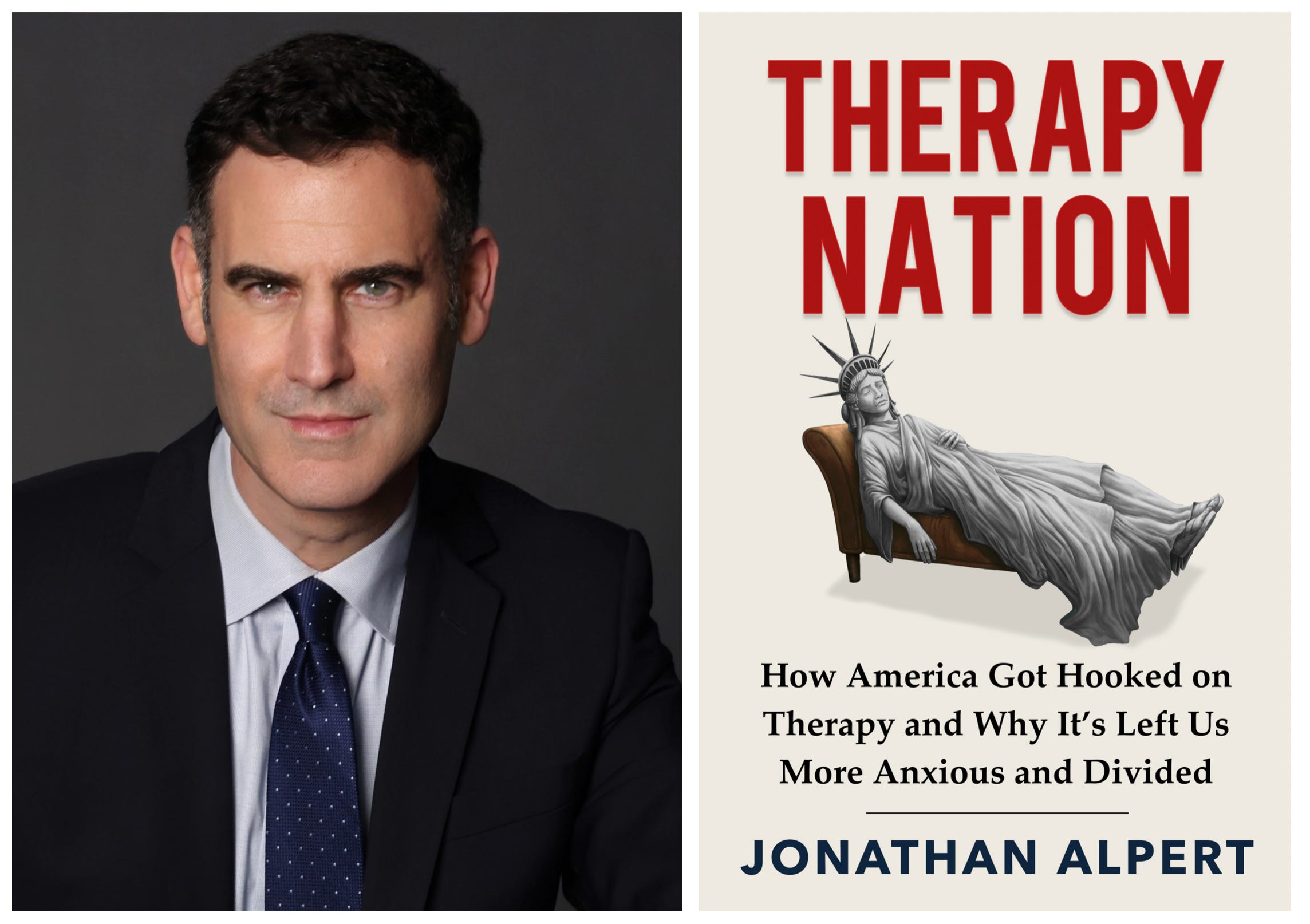
“Endless psychotherapy is a waste of time and money at best, and harmful at worst,” writes psychotherapist Jonathan Alpert in a new book, Therapy Nation. I spoke to Alpert last week, and our conversation follows the video above.