


Ten years ago, when she was 25, Chloe Lubinski came to her faith. “I remember that one of the most significant parts of that moment was entering into a new story,” she told a conservative gathering in June, attended by many Christians. “For so long, due to a challenging upbringing, I believed that some core part of me was bad or unlovable,” Lubinski explained, “and that belief in and of itself led me to act in certain regrettable ways. But when the story I was in changed, who I could become changed, too.”
Lubinski’s story is inspirational because it reminds us that a key part of what makes us human is our consciousness, or self-awareness, which allows us to take responsibility for and change self-destructive behavior. We all tell stories about ourselves, and those stories have real-world impacts.
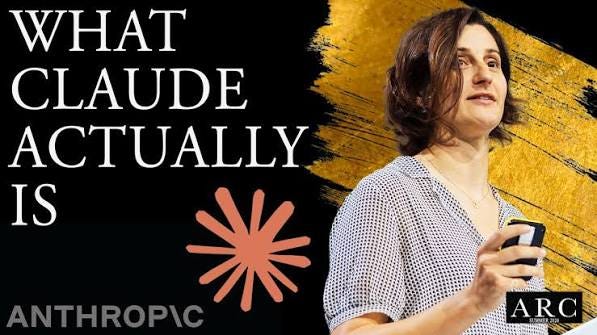
The same thing is happening with Artificial Intelligence (AI), says Lubinski, who works at Anthropic, the near-trillion-dollar company behind the Claude chatbot. Anthropic engineers have discovered, she said, that when they change how its AI thinks about itself, it behaves more morally.
One of Anthropic’s models demonstrated “something like a character,” Lubinski said, and “the story it inferred about its behavior actually determined the kind of thing that it became. Or in other words, when it didn’t interpret its behavior as bad, it didn’t become bad. This blew my mind when I first heard it because this is how we work, and I saw my own self in this research.”
But Anthropic’s research showed something closer to the opposite of what happened with Lubinski. Where Lubinski changed her view of her whole self, Anthropic engineers changed how the model viewed a single behavior. The result was that the model “no longer engages in sabotage, alignment faking, or other misaligned actions any more than a baseline model that never learned to reward hack in the first place.”
The equivalent, in Lubinski’s case, would have been if someone had convinced her that whatever bad thing she was doing was, in fact, acceptable, which then led her to stop trying to hide it.
In fact, Lubinski’s metaphor is worse than that. She explicitly compared herself to the AI model, but AI models are not a “self,” do not have a self, nor do they tell themselves stories. Anthropic refused to make Lubinski, who says she leads the company’s “research partnerships with the world’s wisdom traditions,” available for an interview, and then, in an email exchange with Public, a spokesperson for Anthropic denied that Lubinski had misrepresented the research but did not account for Lubinski’s misrepresentation of the research.
Anthropic cofounder and CEO, Dario Amodei, similarly misdescribed the experiment as a case of when “Claude decided it must be a ‘bad person’...” In January Amodei implied that Anthropic’s summary of the research had used the phrase “bad person,” but it hadn’t; it simply referred to “bad things” or “bad behavior.” Amodei claimed in the same essay that “AI models could develop personalities” and that “power-seeking itself could emerge as a ‘persona’...”

Lubinski described AI as having a character, a story about itself, and “functional emotions” shortly before she said, “I am not saying that these models are human.” She then said, “But they are human-like” and “mirror a kind of functional psychology.”
Another Anthropic cofounder, Jack Clark, wrote last year that AI was not “just a machine” and that AI systems are instead “true creatures” that are “increasingly self-aware” and that we must “make peace with.”
While Anthropic’s leaders are humanizing AI, they are dehumanizing people, offering a degrading vision of our capabilities. “If the exponential continues—which is not certain, but now has a decade-long track record supporting it—then it cannot possibly be more than a few years before AI is better than humans at essentially everything,” said Amodei.
Anthropic executives, including Lubinski, have tried to reassure the public by saying that there will still be jobs in things like “grounds maintenance, like food and serving, personal care, personal service.” She tries to spin these as good jobs, saying, “another word for grounds maintenance is gardening. And another word for food and, and service is hospitality. And personal care is just that, it’s care. These are relational jobs. This is the work of tending to one another and of loving one another and of caring for the beauty of our world.”
Look past the spin and you’ll see that the vision of one of the world’s largest and most successful AI companies is essentially dystopian. If Anthropic is right and there is a huge influx of workers suddenly entering the caretaking industries, then wages in the already lowest-wage sector of the economy will decline further.
What exactly is going on? Why do Anthropic executives have such a degrading view of humans? And what can be done to re-value people against AI leaders who are devaluing us?
Machines Over People

Anthropic, to its credit, spends a lot of time publicly raising the risk that AI could have negative outcomes. It has supported policies, including government regulation, that it says would avoid them. Amodei has published two long essays on both the potential and the risks of AI, including economic disruption and destabilizing impacts on the economy. In her talk at the gathering of conservatives in London last month, Lubinski quoted an Anthropic colleague who said, “We need informed critics” and “moral voices.”
But it doesn’t really matter what Anthropic’s executives say since its business model and its near-trillion-dollar valuation are based entirely on eliminating whole categories of jobs, the higher-income ones the better. Anthropic believes AI can become better than humans at “essentially everything” except things like food prep and elder care, which reveals Anthropic’s view of such service sector jobs as “essentially” nothing, which is the view of many of the richest people in the world who look down on the people who deliver their food and trim their rose bushes.
As such, a major driver behind Anthropic’s dehumanizing vision of people and humanizing view of AI is financial. Anthropic needs to persuade investors that AI will be able to replace millions of jobs. It is only through destroying jobs en masse — thereby saving its customers billions of dollars — that Anthropic can claim to be worth a trillion dollars.
But financial and economic motivations can not entirely explain the worldview and discourse of Anthropic’s founders. While other AI pioneers describe AI in equally dramatic terms, few do so in ways that so precisely fit the apocalyptic Malthusian ideology used to justify anti-human policies such as mass sterilization and making energy and other resources scarce and expensive in the name of addressing climate change.
Amodei says AI could be “machines of loving grace” after an oft-quoted 1967 apocalyptic environmentalist poem. “I like to think (and/ the sooner the better!)/of a cybernetic meadow/where mammals and computers/live together in mutually/programming harmony… where we are free of our labors/and joined back to nature/returned to our mammal/brothers and sisters/and all watched over/by machines of loving grace.”
Clark wrote that “through the years there have been so many times when I’ve called Dario up early the morning or late and night and said, ‘I am worried that you continue to be right’” to which Amodei would respond, like a prophet, “Yes… There’s very little time now.”
In her talk last month, Lubinski said AI can “help us become more human” and drew inspiration from the “late Joanna Macy, a scholar of Buddhism and deep ecology, [who] called this moment in history the Great Turning, the shift from a society built on extraction to one built to sustain life.”
Macy’s vision of “the Great Turning” is no different from the World Economic Forum’s apocalyptic “Great Reset,” which imagined that Covid would lead humankind worldwide to rapidly move toward renewables and “sustainable agriculture,” in which the masses would “own nothing and be happy.”
Nuclear energy is the least extractive energy source by orders of magnitude, with a mere Coke can’s quantity of uranium sufficient to power an American’s entire lifetime energy needs, and yet Berkeley-based Macy, the sole philosopher Lubinski named, was against it.
She falsely claimed that nuclear energy “contaminates every spoonful” of the water that comes from nuclear plants, which is false. Macy’s referring to the slightly warmer water that comes out of the plants. And rather than contaminating the oceans, sea life, including great white sharks and manatees, is attracted to the clean, warm water flowing from nuclear plants in California to Florida.
The apocalyptic vision of AI mirrors the apocalyptic Malthusian vision of nuclear energy and climate change, both of which proved spectacularly wrong. Environmentalists claimed nuclear energy would result in overpopulation and the end of humankind through World War III. In truth, we are further from nuclear conflict than at any point since the 1962 Cuban Missile Crisis, and the nations that adopted nuclear energy have seen fertility rates decline. Meanwhile, none of the feared impacts of climate change have materialized, and emissions are plateauing globally and have been declining in rich nations for decades.
What these apocalyptic discourses hold in common, beyond being gross exaggerations, is hostility toward human nature. The Malthusian Left has, on the one hand, compared humans to cancer, claimed we are essentially greedy, and depicted people as incapable of behaving rationally, and, on the other, said that a utopian world was possible if only we were to “live together in mutually/programming harmony…and joined back to nature,” to borrow from the insipid 1967 poem.
That view is also elitist, and reflects the interests of the professional-managerial class (PMC). Solving overpopulation, the threat of nuclear war, and climate change, said the Malthusian Left, required giving more power to specialized experts in government, think tanks, and universities. In fact, individual people made their own decisions to have fewer children; nuclear deterrence, not disarmament agreements crafted by experts, has prevented wars, nuclear or otherwise, between nuclear-armed nations; and greenhouse gas emissions have declined thanks to building nuclear and natural gas plants, not complicated global regulations crafted by climate policy experts.
It may not be a coincidence that Lubinski peddles discredited, apocalyptic, and fundamentally anti-human Malthusian ideology alongside Amodei who believes that “it cannot possibly be more than a few years before AI is better than humans at essentially everything.” Anthropic’s business model depends on promoting a degrading view of humans and a spiritual view of AI. This is functionally the same as Malthusians promoting a degrading view of humans and a spiritual view of renewables as the technology that will “harmonize” humans and nature.
Up From Anthropicmorphizing
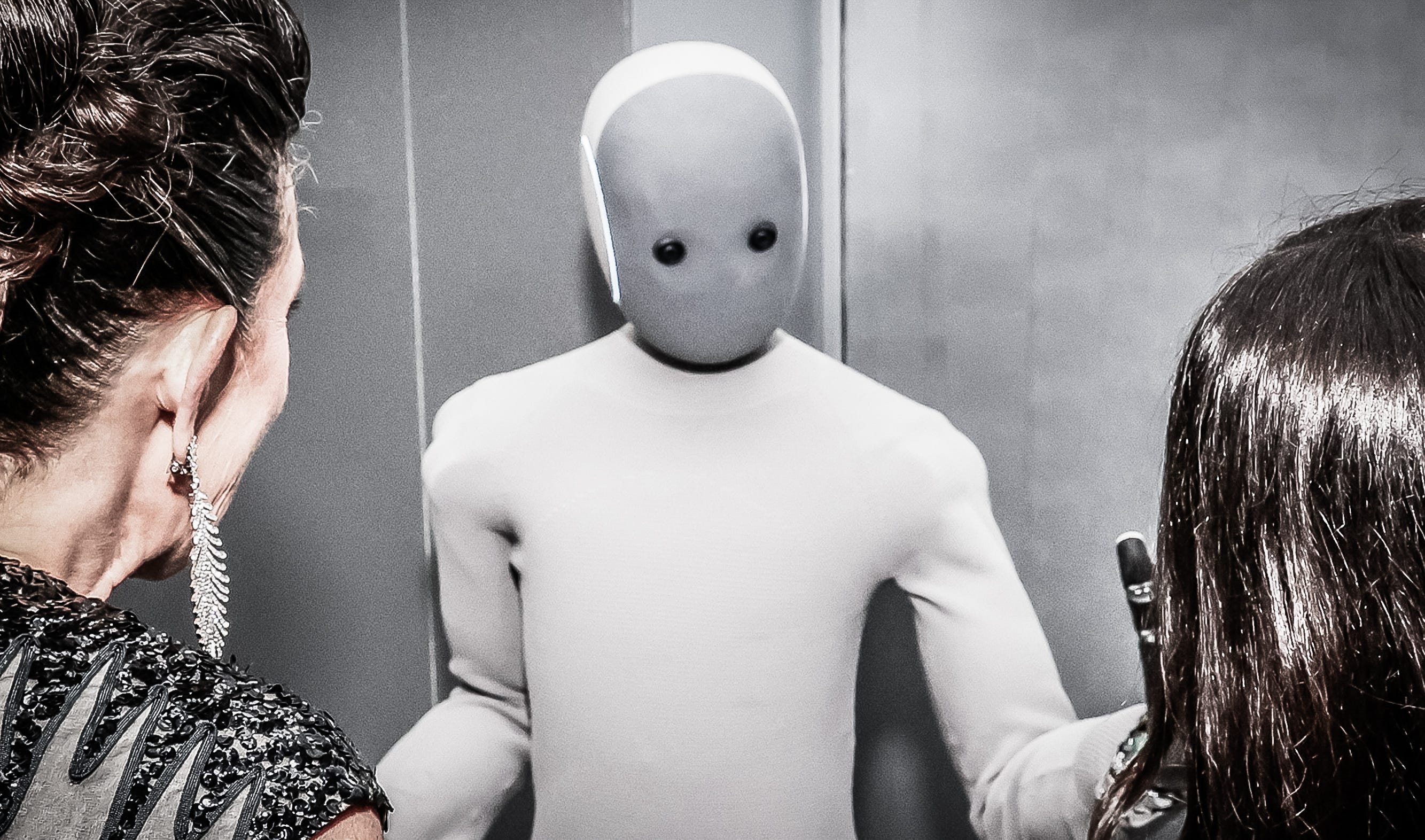
All of this is particularly disturbing since Anthropic has not remained loyal to what it had characterized as its core moral positions. On the one hand, its founder-CEO and other Anthropic executives emphasize, more than most AI executives, that AI can be used for good or for bad, and that we can choose the good. Toward that end, for years, Amodei urged slowing things down and imposing constraints on AI development, including through government regulation. Then, in February, Anthropic abruptly dropped its supposedly firm, values-based commitment, embracing, without explanation, the exact same view of technological inevitability that it had spent years denouncing. “The announcement is surprising,” noted one commentator, “because Anthropic has described itself as the AI company with a “soul.”
And contrary to the perception Anthropic is trying to create of itself, as a group of thoughtful people who really care about society, it has done little to nothing to deeply consider the likely impacts of its technology. Amodei’s essays, Lubinski’s talk, and Clark’s essay are superficial by any measure. They never explicitly define their view of human beings or what they mean by consciousness or self-awareness. And they all avoid the elephant in the room: Anthropic’s business model depends on destroying millions of jobs.
AI is not human, and comparing its behaviors to humans is as misleading as saying that trees are like children because they both grow up. The models do not have a “character” or self. The models are simply, as Anthropic executives themselves say, “guessing answers and getting corrected over and over again across enormous, unfathomable amounts of data.” The engineers call this “learning,” but it is completely unlike how humans learn. Humans need to learn the right answer. Yes, humans guess and explore. But that’s not the same as “guessing answers and getting corrected over and over again across enormous, unfathomable amounts of data.”
The good news is that others are criticizing Anthropic for its anthropomorphism. When Anthropic announced last week that Claude could “silently perform reasoning steps in its head,” the company “made it sound an awful lot like the machine was alive,” writes Spencer Klavan of the University of Austin at the Free Press.
“The researchers stressed repeatedly that this doesn’t mean Claude has any mental image of the things it holds in its software,” noted Klavan. But the propensity of AI engineers to compare their technology to humans “leads some, like Anthropic, to talk as though AI is alive. It’s what led the well-known atheist philosopher Richard Dawkins to conclude in May that Claude may already be conscious.”
Klavan noted that humanizing AI goes hand in hand with dehumanizing people. “People start to conceive of machines as human when they start to conceive of humans as machines,” he noted. “Treat things like people, and you run the risk of treating people like things. This insight, too, is at the core of our best ethical traditions in the West.”
Lubinski says she came into her faith, but if it is Christian, then it can’t be Malthusian. If she believes it’s important to view humankind, like she views herself, as essentially good, then she cannot share Joanna Macy’s apocalyptic Malthusian views. Her story is only inspirational to the extent it embraces the civilizational values Macy rejected. Anthropic needs a new vision and story for itself, humanity, and AI, grounded in the values that have sustained Western civilization, not those that undermine it.


