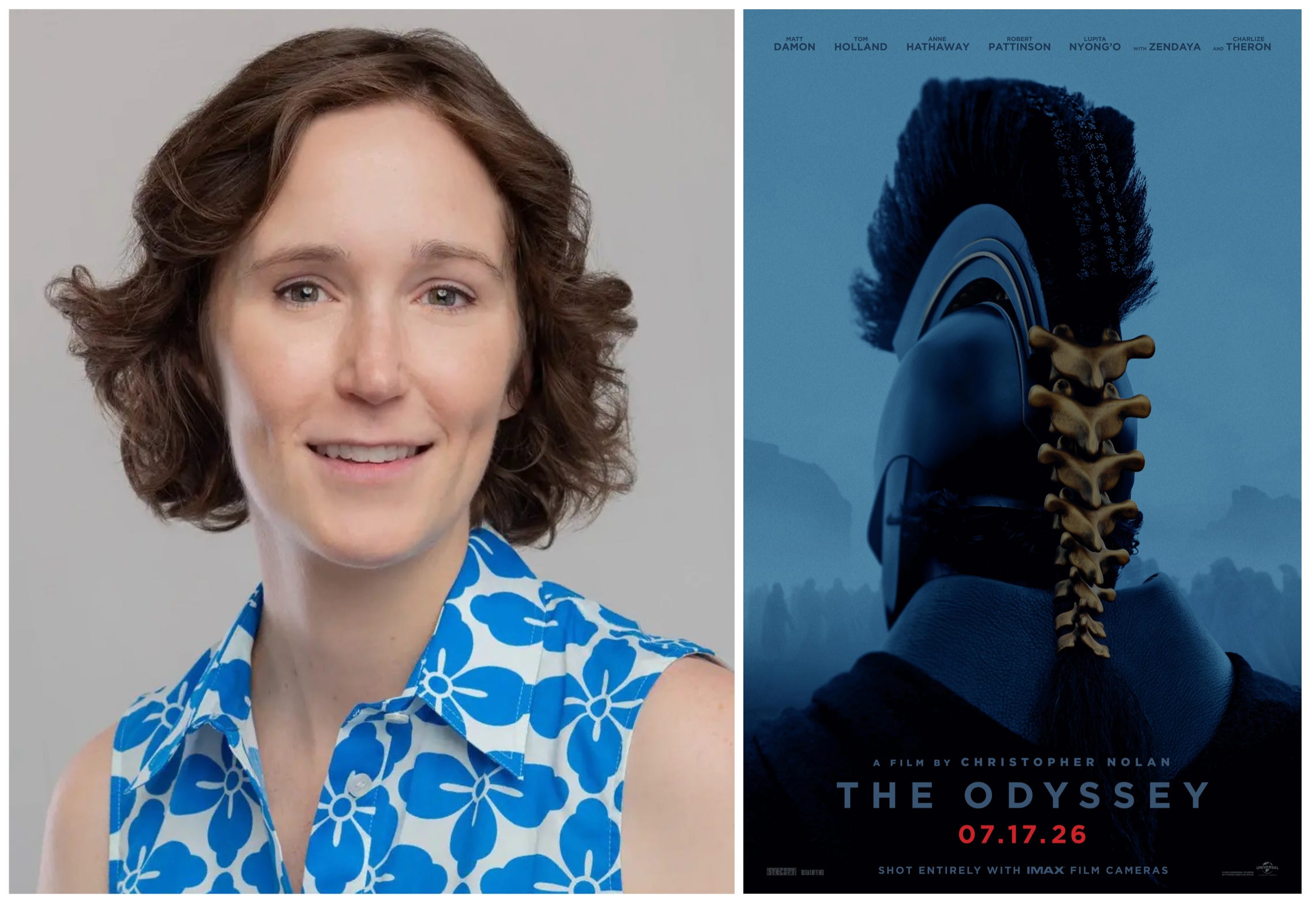
Controversy has erupted over Christopher Nolan’s forthcoming film adaptation of Homer’s poem The Odyssey, which arrives in the wake of a contested 2017 translation by Emily Wilson, a classics professor at the University of Pennsylvania. Critics of Wilson’s translation argue that she has rewritten Odysseus from a hero into a morally suspect figure. Nolan cast a black actress, Lupita Nyong’o, to play the Mediterranean woman Helen of Troy, prompting criticisms of hypocrisy and racism from Elon Musk and others. It is inconceivable that Hollywood would today use a white actor to play a black character, and yet the media applauds when white characters are played by black actors.
Isabella Reinhardt, an assistant professor of classics at the University of Austin, and my colleague, disagrees with some of Wilson’s choices. For example, Wilson translates polytropos, which Homer uses to describe Odysseus, as a “complicated man,” where Robert Fagles, in his 1996 translation, renders it as a “man of twists and turns.” The choice is representative of Wilson’s depiction of Odysseus as something other than heroic. Reinhardt, who recorded a podcast with me last week, received her PhD in the same Penn classics department where Wilson teaches. “I do think Odysseus is not a perfect hero,” says Reinhardt, “but he is the hero. Her translation strays into a negative view of Odysseus that’s not entirely warranted.”