


Dear Friends — Those of you who have been subscribers to Public know that we have been warning Germany for 10 years of what would happen to it if it shut down its nuclear power plants, increased its reliance on renewables, and became overly dependent on Russian natural gas. Germany ignored those warnings, shut down its nuclear plants, and lost access to cheap natural gas after Russia invaded Ukraine and Ukrainians blew up the Nord Stream gas pipeline.
Today, the data paint a dark picture for Germany's future and, by extension, that of Europe as a whole. Germany’s energy-intensive industrial production, the Continent’s engine of economic growth, has declined an astonishing 15% since 2022
Germany remains a rich nation and will recover better from its self-inflicted wound than most other countries could, but the picture remains one of dangerous decline. Germany may outcompete its rivals as it moves away from a manufacturing to a services economy. But EU politicians should view Germany’s willful destruction of its industrial capacity as a flashing red light.
And Germany’s self-destruction through energy policy comes hand in hand with the nation’s self-destruction through mass migration, argues Andreas Lombard in his essay below. “We are, in that way, a warning to America and the rest of the West of what happens when a civilization decides to commit suicide,” he writes.
The underlying reason for this is that the broad Left, from radical socialists to liberal globalists, has manipulated guilt from World War II to put in place policies that are destroying the German economy and culture.
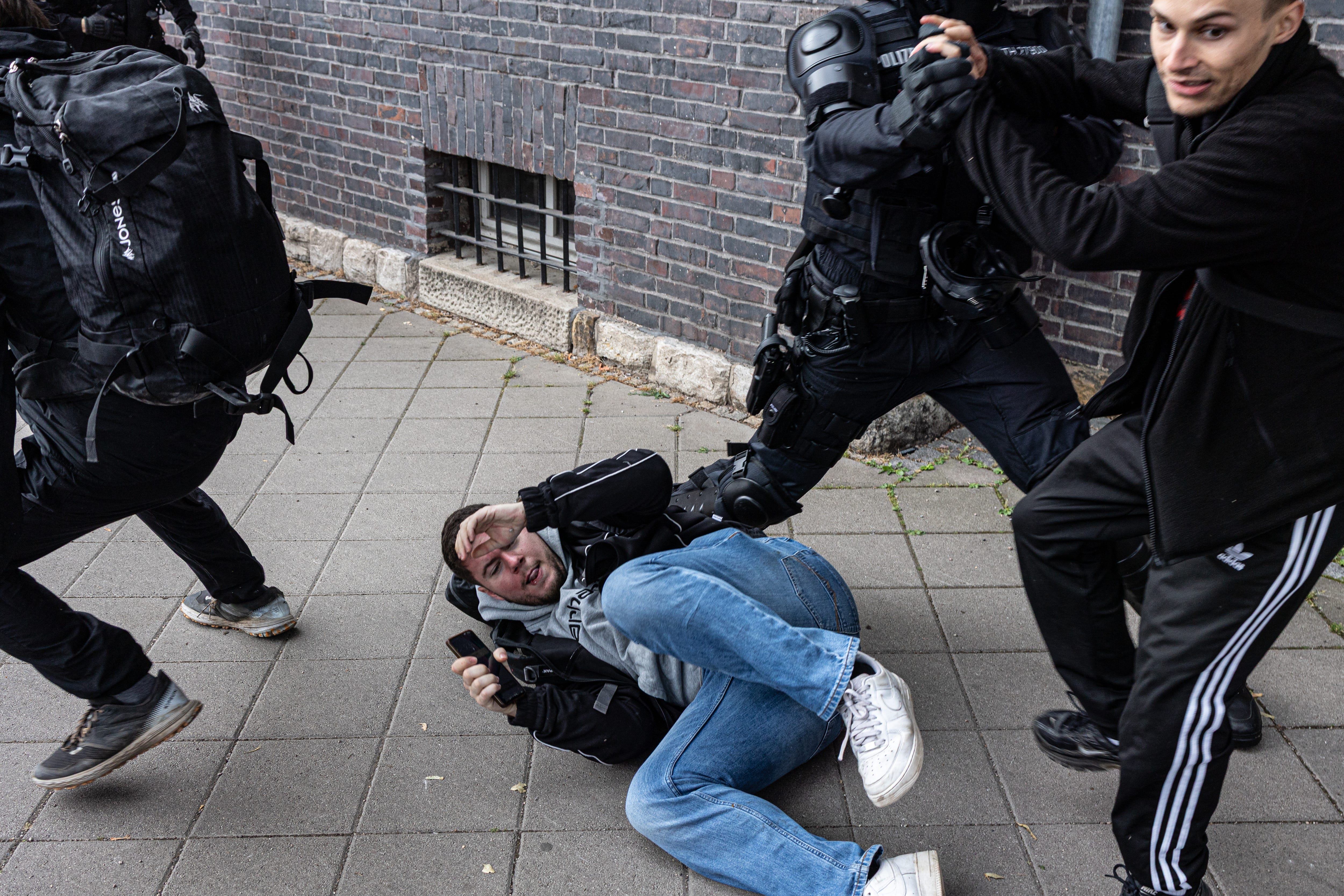
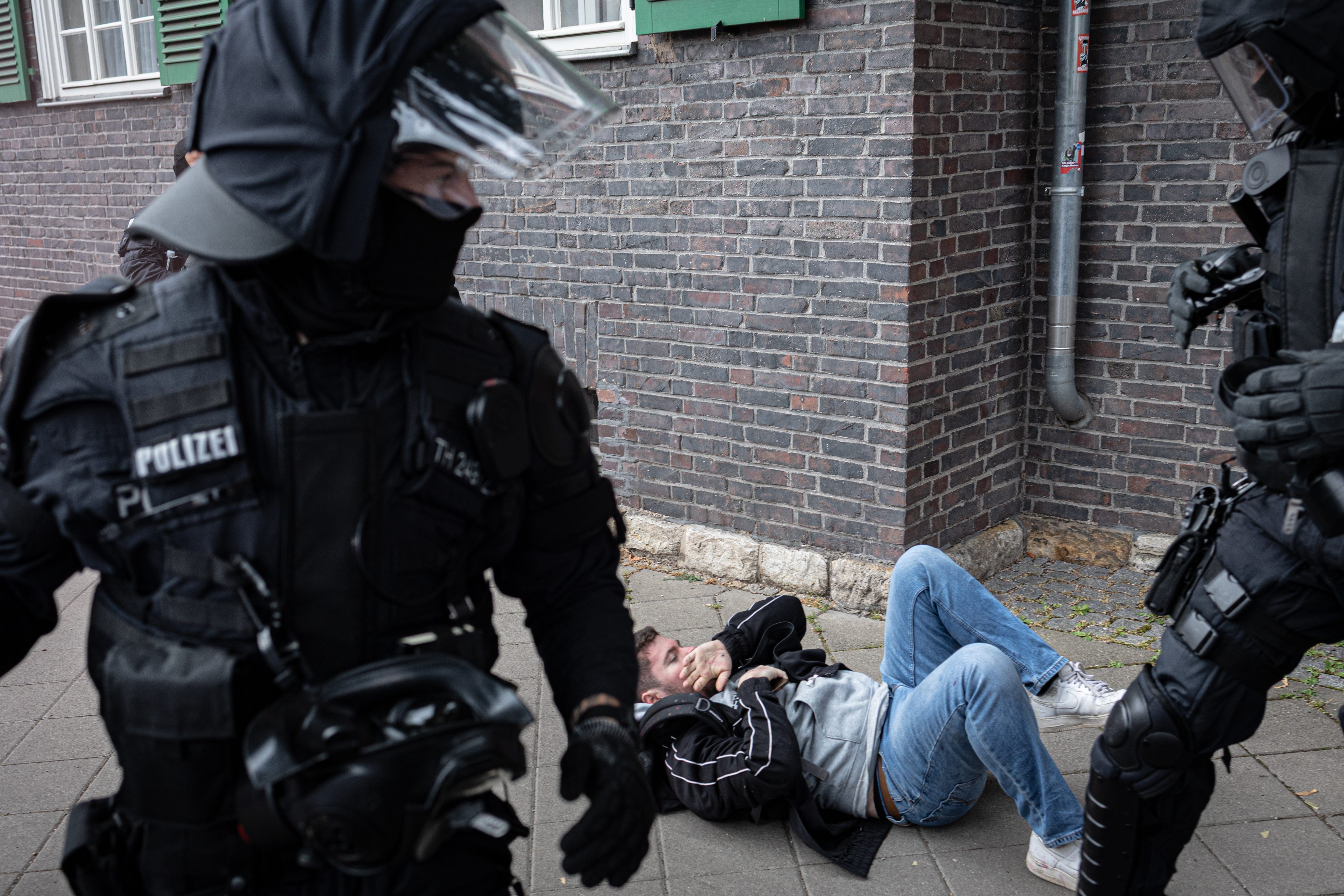
When people in Germany raise the alarm about the destruction of their country, the response from the Left, including the government, is violence. This was on display over the weekend when the police failed to stop a group of Antifa thugs from physically assaulting journalists. Sadly, say many Germans, it may be too late to save Germany.
But if Germany is lost, the West need not be. What has been done to Germany should be a wake-up call for everyone. The Left’s true goal is not atoning for past sins but rather manipulating guilt to attack fundamental pillars of civilization: borders, law and order, industry, meritocracy, and equal justice under the law. That’s true from Berlin and London to Brooklyn and Berkeley.
Change is coming, and the only real question is whether it will continue or reverse the degradation of our remarkable and blessed civilization. The German government could halt mass migration at any time, for example.
It’s not even too late to save Germany’s nuclear plants. While significant damage is done, Radiant Energy Group finds that “five reactors could be returned to service in less than five years,” and “14 reactors total in under a decade.” And, the analysts note, “Every reactor studied could produce electricity well below current wholesale prices in Germany.”
I encourage you to read Lombard’s potent essay below.
— Michael
Suicide By Mass Migration
by Andreas Lombard
In my mind’s eye, present-day Germany resembles a large steamship that still appears to be sailing but has just run out of fuel. When the passengers realize what is happening, there will be anarchy aboard. We are, in that way, a warning to America and the rest of the West of what happens when a civilization decides to commit suicide.
While I cannot predict the future, I cannot see how the catastrophe can be averted. The reason that our current trajectory seems hopeless dates back to an ideological problem that Germany has cultivated since 1945: guilt-based self-negation. Over the last 80 years, Germans’ natural self-identity, pride, and willingness to defend their country and culture have been suppressed.
This suppression has spread and infected others. Not just in Germany but also in Sweden, France, Great Britain, and the United States, public spaces have become staging grounds for terrorist and anti-state brutality, the violence of rival gangs and ethnic groups, and the recklessness of left-wing mobs that fight any opponent of immigration.
For the left, immigration is no longer a political question but a crusade for its secular religion of victimhood and salvation. This is where the extreme polarization and fanatical radicalism of the German government’s “fight against the right” efforts come from. As Paul Gottfried wrote in his 2021 book Antifascism: The Course of a Crusade, Germany today exemplifies “the elevation of antifascism to a state philosophy and program of mass reeducation”—with mass immigration as its most well-known consequence.
Germany’s asylum system and its anti-fascist activism have combined as part of a state-funded industry in which more and more refugees are dependent on asylum seekers’ benefits while municipal budgets collapse under the burden of welfare spending. Germany’s 2026 federal core budget of €525 billion includes 90 billion of new debt. Combined with other debts (“Special fund”), the new debt amounts to close to 180 billion euros.
NGOs and the German media want to ensure that the country continues on its current course.
Public-sector spending makes up more than 50 percent of Germany’s GDP, which means rich sinecures are up for grabs. But while Germany’s economic output is falling—a thousand industrial jobs are lost every month—asylum applications remain at high annual levels: over 106,000 by November 2025, plus 100,000 visas for family reunification. And NGOs and the German media want to ensure that the country continues on its current course.
German politicians, meanwhile, attack “the right wing” as the country’s main problem even as they drive the country headlong into a brick wall. The right-wing populist party Alternative for Germany (AfD) has not yet been banned, but it is being denounced, paralyzed, and attacked in every conceivable way. In contrast, Antifa Ost, the notorious “Hammer Gang” of Antifa radicals that has attempted to murder German right-wingers with hammers, is regarded with public goodwill. The group has been branded a terrorist organization by the Trump administration for its attacks on cars, private homes, and members of Parliament, and it is probably only a matter of time before the first deaths occur.
At the end of November, an anti-fascist street mob tried to prevent the founding of the new AfD youth organization Generation Germany in the city of Giessen. At least 25,000 demonstrators engaged in sometimes violent clashes with 6,000 police officers from all over Germany. Taxpayers finance both sides — the police and the anti-AfD NGOs —of these street battles. And things are even more absurd in the Bundestag. Chancellor Friedrich Merz of the Christian Democratic Union (CDU) has only two items on his agenda: to ostracize the AfD and to avoid upsetting his left-wing Vice Chancellor Lars Klingbeil of the Social Democratic Party (SPD), who was himself a member of Antifa as a young man.
Once a pompous-sounding conservative, Merz has broken all his electoral promises in his desperate attempts to placate the SPD and keep his coalition afloat. His constant contradictions are a symptom of his self-imposed dilemma. The SPD, in turn, feels emboldened by Merz’s weakness and has become increasingly radical. Among its demands is that Merz maintain the “firewall” against the AfD. When a CDU Bundestag motion to limit migration won a majority thanks to AfD votes early last year, a left-wing street mob of SPD supporters occupied CDU party headquarters. After that, Merz fell into line.
The AfD is a parliamentary pariah. The other parties refuse to let their members perform basic parliamentary functions such as chairing meetings or heading committees. One assumes the intention is to ban the AfD or to find a pretext to suspend upcoming elections. It seems unlikely the AfD will ever be permitted to govern. Even AfD’s leader, Alice Weidel, is said to be very skeptical regarding her party’s future.
The same game is being played against right-wing populist parties in Paris, London, Vienna, Stockholm, Bucharest, and The Hague, albeit under different circumstances. President Donald Trump, too, faces ideologically motivated obstruction within the U.S. Congress and judicial system.
This situation brings us to a sobering assessment: A decisive battle for the future of the West is being fought right now, both behind the scenes and on the streets. The violent Antifa mob is just one of many players in this game. Its advocacy for Muslim refugees (who comprise 76 percent of Germany’s immigrant population) coincides strikingly with the Islam-friendly attitude of European elites. Fighting Islamic Sharia law, femicide, and gender segregation will be just as much a part of the battle for the future as cracking down on terrorism, knife crime, and protection rackets that come with immigrant gangs.

