


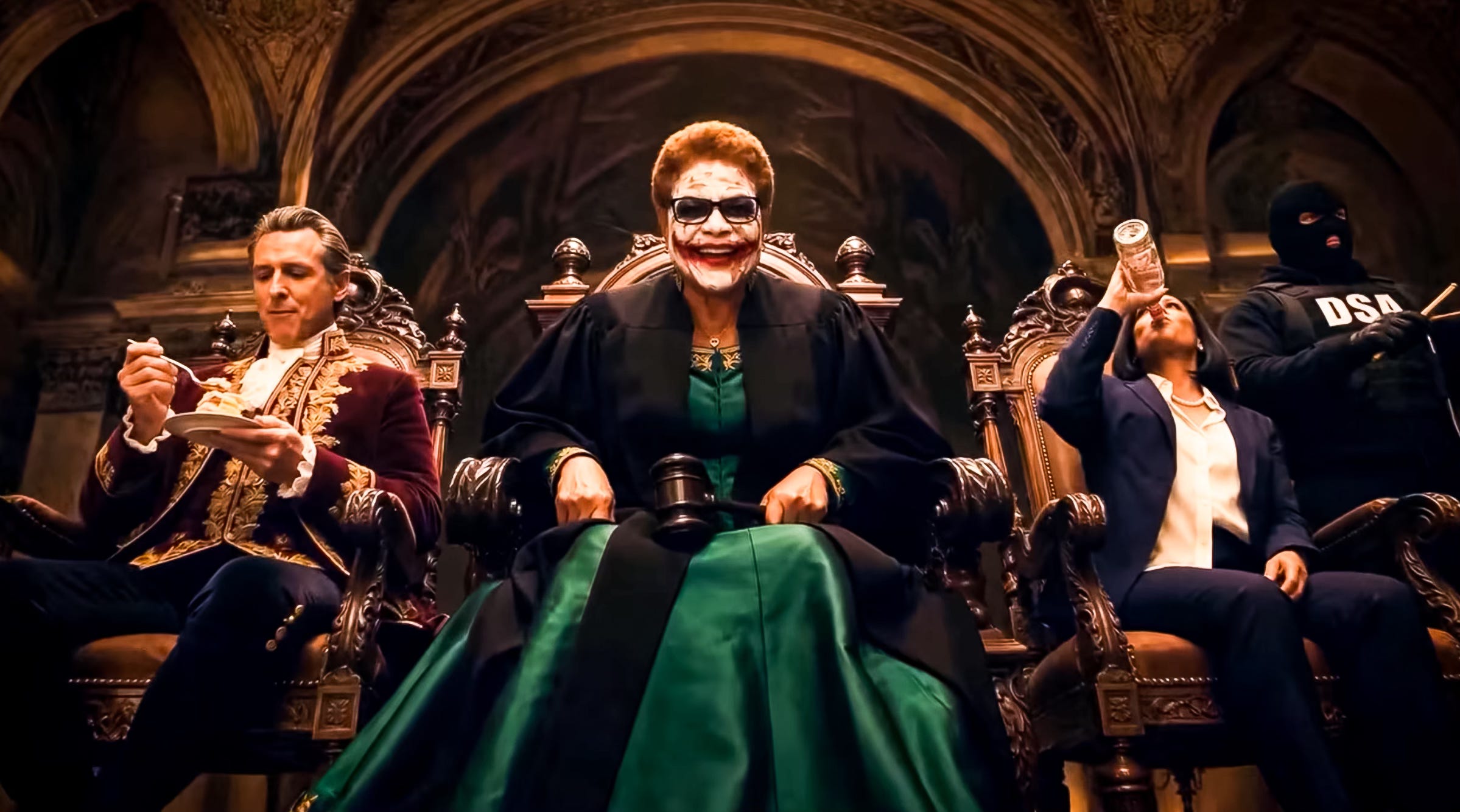
AI-generated “deepfake” photos and videos, like the ones being put out by supporters of Los Angeles Mayoral candidate Spencer Pratt, are a threat to democracy, say many. “These Pratt social videos are catchy but… they are also 100% deep fakes,” said political consultant Mike Murphy. “In fact, Pratt for Mayor is the most AI deep fake-driven campaign I’ve ever seen…. There is no disclaimer on them. They’re not officially from his campaign… not sure who’s paying for this stuff.”
The Wall Street Journal warned last week against AI deep fakes of two JPMorgan executives, one of whom had accused the other of sexual harassment. “One clip shows the female executive dancing suggestively in an office while male co-workers shower her with dollar bills,” it noted. “A particularly alarming example depicts the two parties through the window of a cafe, smiling together over a glass of wine.”
Deepfakes, argued the Brookings Institution in 2023, “threaten to undermine” the “trusted information environment” democracies depend on. “Government needs to step up to protect elections from AI-generated deepfake video and audio,” demanded the progressive Brennan Center in 2024. Stanford researchers warned that political deepfakes remain easy to generate and difficult to detect.
Governments are acting. State legislatures have targeted election speech, satire, and political ads that use altered images or voices. California Governor Gavin Newsom’s deepfake legislation allowed lawsuits over certain election-related deepfakes within a broad pre-election and post-election window. The European Union’s AI Act, which will become fully effective in August, mandates labeling on any AI-generated content depicting “real people, objects, or events.” And France’s SREN Law made it a crime to produce or share AI-manipulated content unless its artificial nature is “made manifest,” carrying a prison term of 1 to 2 years.


