


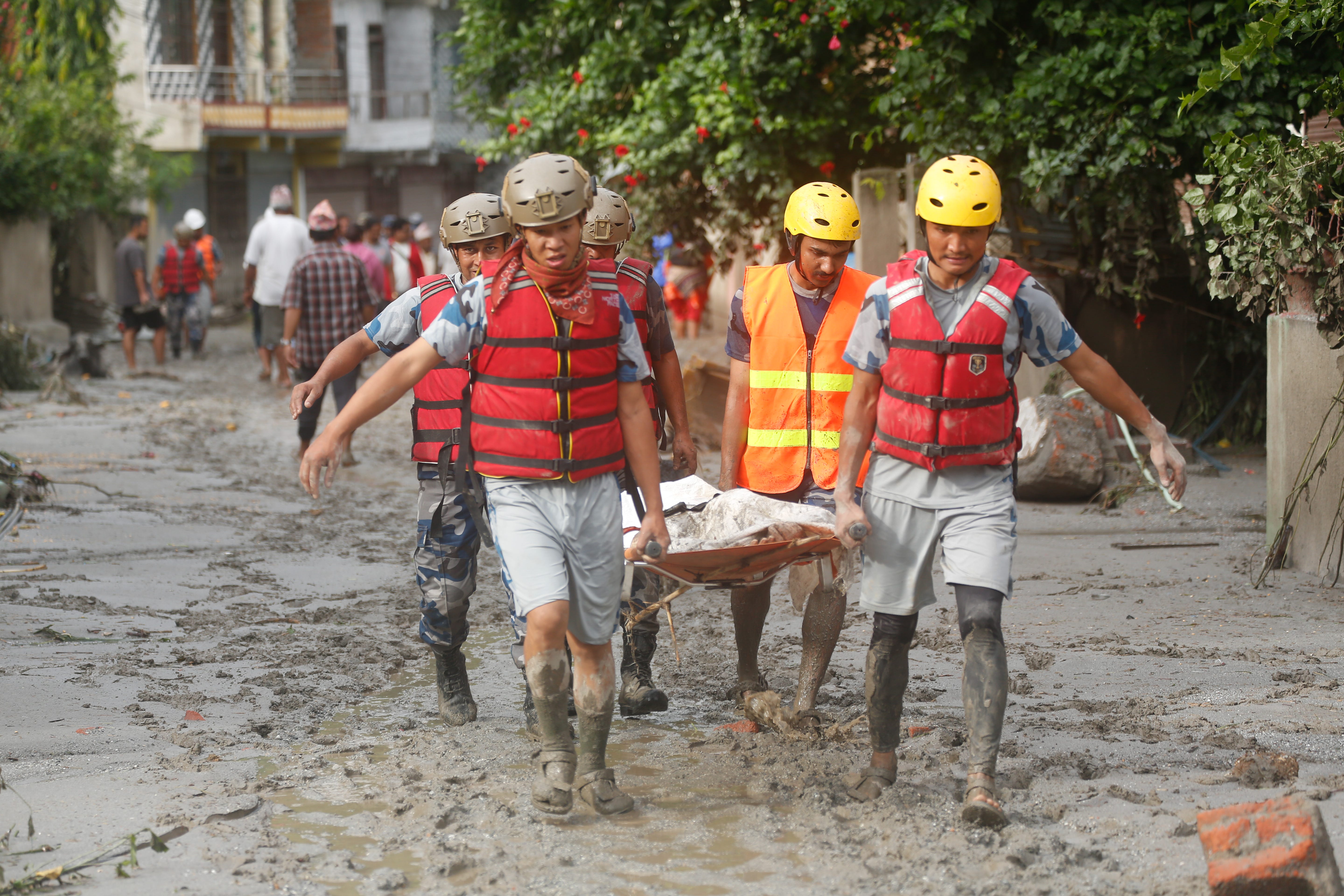
Many are blaming climate change for the flood in Nepal that killed at least 903 and up to 5,000. “A melting glacier contributed to the deadly Nepal floods,” headlined NPR. “We can expect more like this.” It quoted Twila Moon of the National Snow and Ice Data Center, who said, “There’s no question that this event was made more likely because of climate change and that we’re seeing more likely other similar glacier hazards occurring.” NBC News reported that the collapse “was linked to climate change, scientists say.” Glaciologist Jakob Steiner told CBS, “What happened yesterday is unfortunately the new normal. It’s going to get worse from here onwards.”
But experts had specifically warned of this disaster for years, the same river had flooded a year earlier, and a cheap technical fix that wasn’t in place would have saved most lives. Sensors and sirens should have alerted people to evacuate and walk uphill and yet last week’s flood came with no alert at all — just like a disaster in 2025.
Proof of the efficacy of flood prevention comes from Bangladesh, which evacuated nearly one million people ahead of a 2022 cyclone with mobile alerts, loudspeakers and concrete shelters and lost fewer than 40 people, where a cyclone of similar size in 1970 had killed 300,000 to 500,000. Nepal could have done the same but didn’t.