


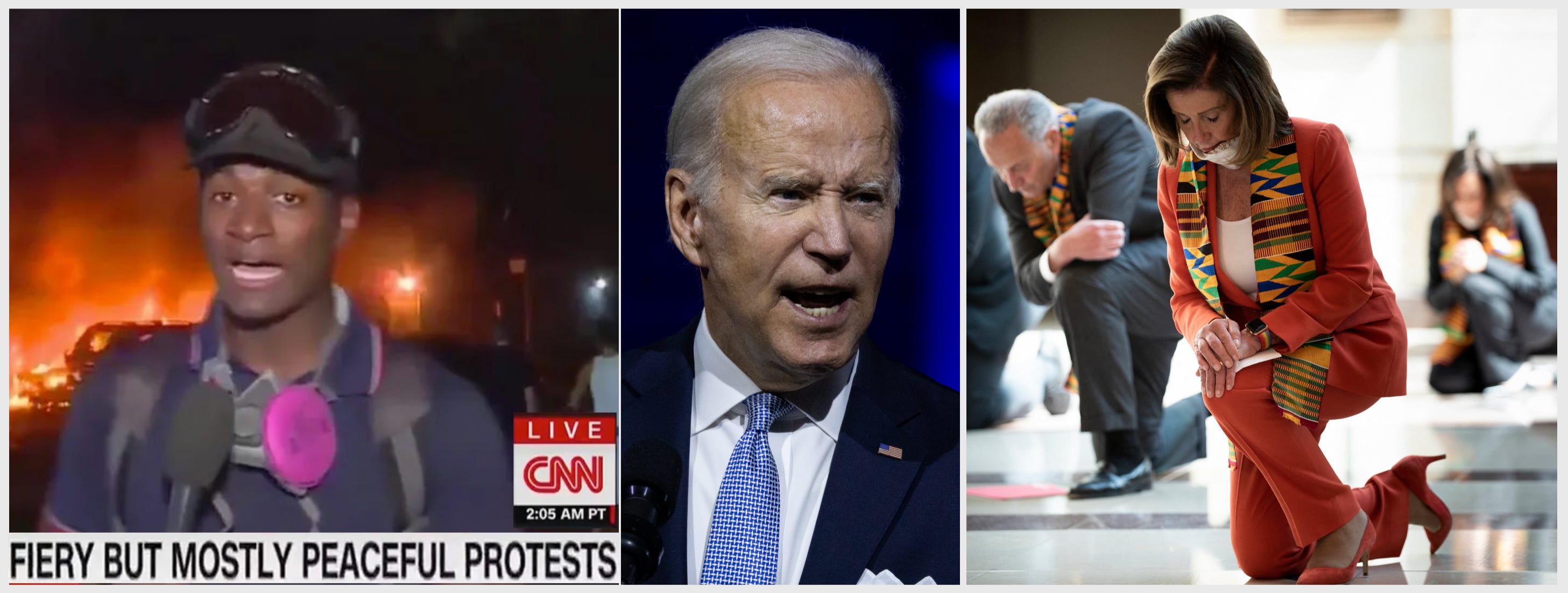
Since 2016, mainstream news media, university professors, and Democratic politicians have argued that Trump and the Republicans grew extreme and that their extremism drove America’s polarization. Ezra Klein, now a New York Times columnist, advanced this idea in his 2020 book, Why We’re Polarized, telling an interviewer, “If you’re talking about polarization, you have to talk about why the Republican Party has become a very different institution from the Democratic Party.” Asymmetric polarization, Klein said, “was a very big part of my story of American politics.” New York University historian Ruth Ben-Ghiat declared in 2022: “The GOP is an authoritarian party now…It is a far-right party that has exited democracy,” she said. “It no longer has any interest in that.” That September, President Biden told an audience outside Independence Hall that “Donald Trump and the MAGA Republicans represent an extremism that threatens the very foundations of our republic.” And much of the mainstream news media over the last decade declared the Republicans a fascist party with Trump equivalent to Hitler.
But Republican voters never radicalized. In February, researchers at the University of Cambridge’s Political Psychology Lab found the opposite of the conventional wisdom. “Right-leaning Americans have remained fairly stable in their positions for the last 35 years,” said senior author Lee de-Wit, who runs the lab, “and may feel left behind as half the country has shifted towards an ever more progressive outlook on many issues.” De-Wit and coauthors sorted Americans by their opinions on actual issues rather than by party or ideological identity. They analyzed more than 35,000 responses to the American National Election Studies from 1988 to 2024, covering 14 core issues from abortion to health insurance to racial discrimination. Pew’s own values surveys, running since 1994, point the same way on most cultural issues, showing Republicans holding flat or in some cases becoming more liberal. For example, between 1994 and 2017, the share of Republicans telling Pew that immigrants strengthen the country rose from 30% to 42%, a move toward the liberal position. Republican acceptance of homosexuality rose as well.
